This is sample content. Cards are made of paper and card stock, so the basics of protecting them are simple: limit handling, keep surfaces clean, and store them somewhere stable.
Start with the right supplies
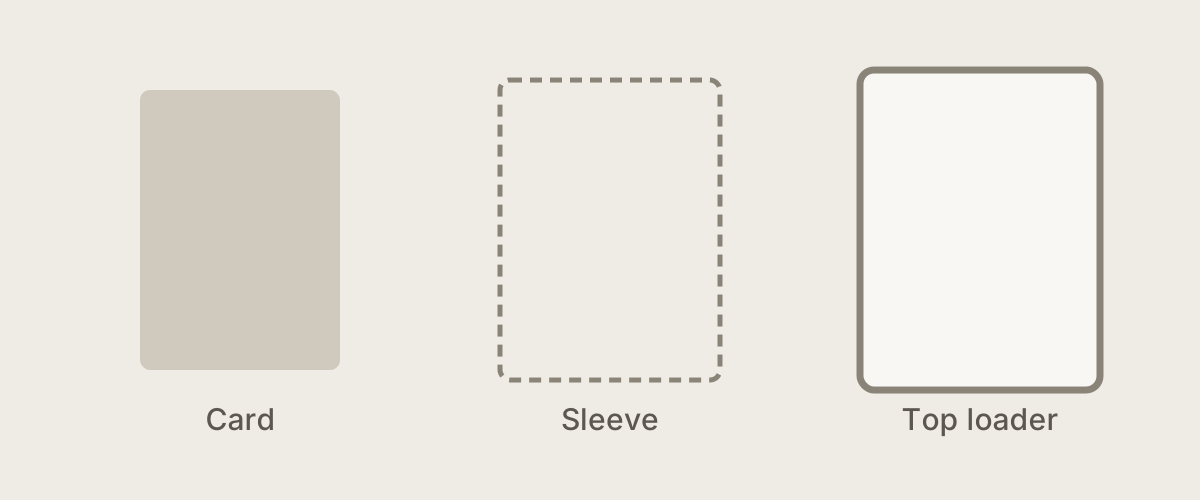
Most collectors use a layered approach. A soft sleeve protects the surface, and a rigid holder protects the corners and edges.
- Penny sleeves — thin, soft plastic sleeves that guard against scratches and fingerprints.
- Top loaders — rigid plastic holders that keep a sleeved card flat.
- Card savers — semi-rigid holders often used when submitting cards for grading.
- Team bags — resealable bags that close over a top loader to keep out dust.
Comparing common supplies
| Supply | Best for | Notes |
|---|---|---|
| Penny sleeve | Every card | Use as the first layer. |
| Top loader | Cards you want kept flat | Choose the thickness that fits the card. |
| Card saver | Grading submissions | Easier to remove cards from. |
| Team bag | Sealing top loaders | Helps keep dust out. |
Sleeving a card step by step
- Wash and dry your hands, and work on a clean, flat surface.
- Slide the card gently into a penny sleeve, top edge first.
- Insert the sleeved card into a top loader or card saver.
- Optionally seal it in a team bag before storing.
Choose a good storage spot
Store cards upright in storage boxes sized for your holders. Keep them out of direct sunlight, which can fade ink, and away from humidity, which can cause warping. A closet shelf inside your living space is usually a better choice than an attic or basement.
A simple rule of thumb: if a room is comfortable for you, it is likely comfortable for your cards.
A note on handling
Hold cards by the edges, avoid stacking unprotected cards, and use sleeve → holder → box as your default routine.